Chaga Capsules or Extract – What's Right for You?
Origin, Cultivation, and Use of the Chaga Mushroom
The inhabitants of Siberia have also been using Chaga tea as a dietary supplement for many centuries. In German-speaking countries, the Chaga mushroom is primarily known as the “Inonotus obliquus” (or “Schiefer Schillerporling”). Other names, though much rarer in Europe, include Fungus betulinus, Kabanoanatake, Hua Shugu (Bai Hua Rong), and Hua Jie Kong Jun. Chaga may be the “King of Medicinal Mushrooms” – but its appearance doesn't necessarily suggest that: The tree-growing mushroom resembles gnarled, brown to black, irregularly furrowed bark. As they age, the nodules of the Inonotus obliquus become so dark that it gives the impression the tree has been burned in the affected areas. Chaga, or Inonotus obliquus, is native to the forest regions of Russia, Poland, and Scandinavia. It also occasionally grows in Canada and Japan, but is very rare in Central Europe. As a parasite, the Inonotus obliquus attacks deciduous trees – especially birches – causing severe white rot. The Inonotus obliquus is one of the few mushrooms that cannot be cultivated. Its presence is therefore limited to the wild. Accordingly, our Chaga comes from pure wild collection. Only Chaga nodules that have grown on birch trees are processed as medicinal mushrooms. Chaga has no significance as an edible mushroom. However, in the regions where it is prevalent, it has been consumed for centuries in dried and crushed form as an infusion, as its beneficial properties were recognized there early on. The Inonotus obliquus is mainly used as a tea. But Chaga infusion with coffee is also growing in popularity.
Chaga Capsules or Extract – What's Right for You?
Extract, powder, powder + extract, or crushed? Individually, there are very different needs. And the concentration also varies significantly in the different dosage forms.
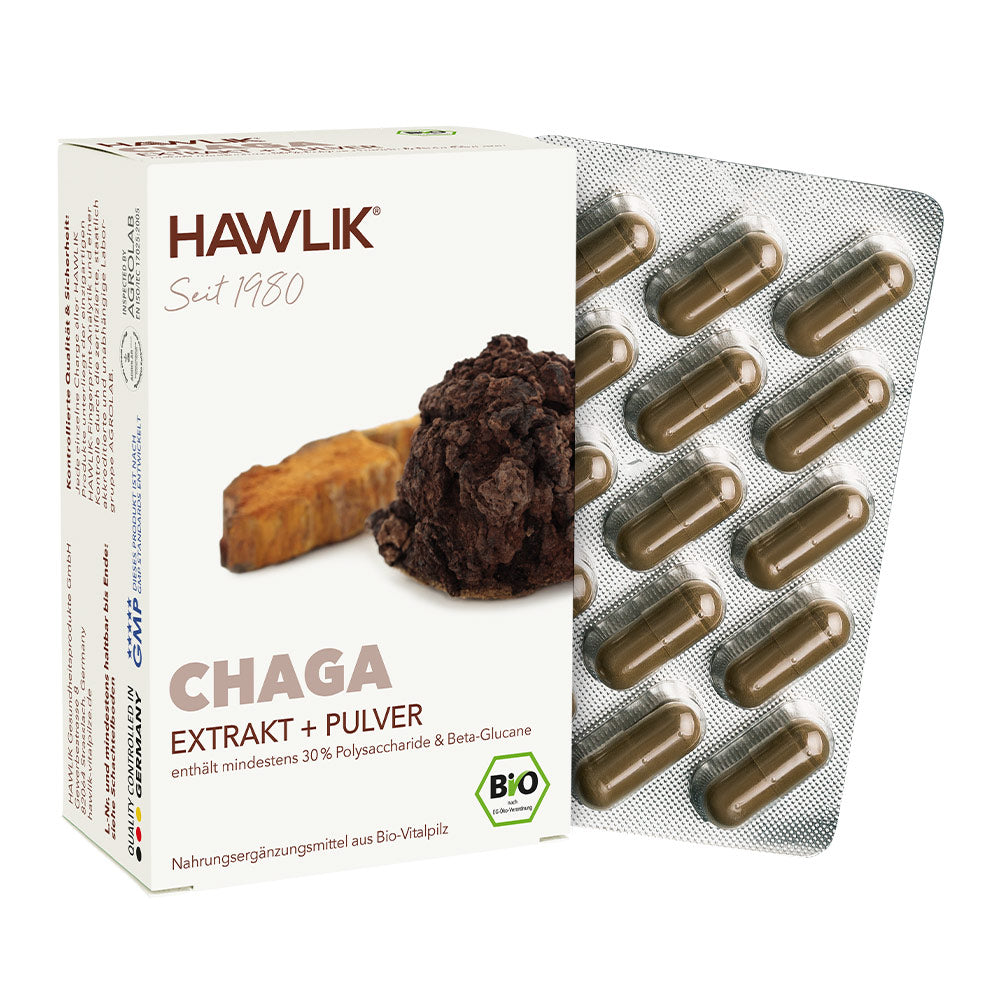
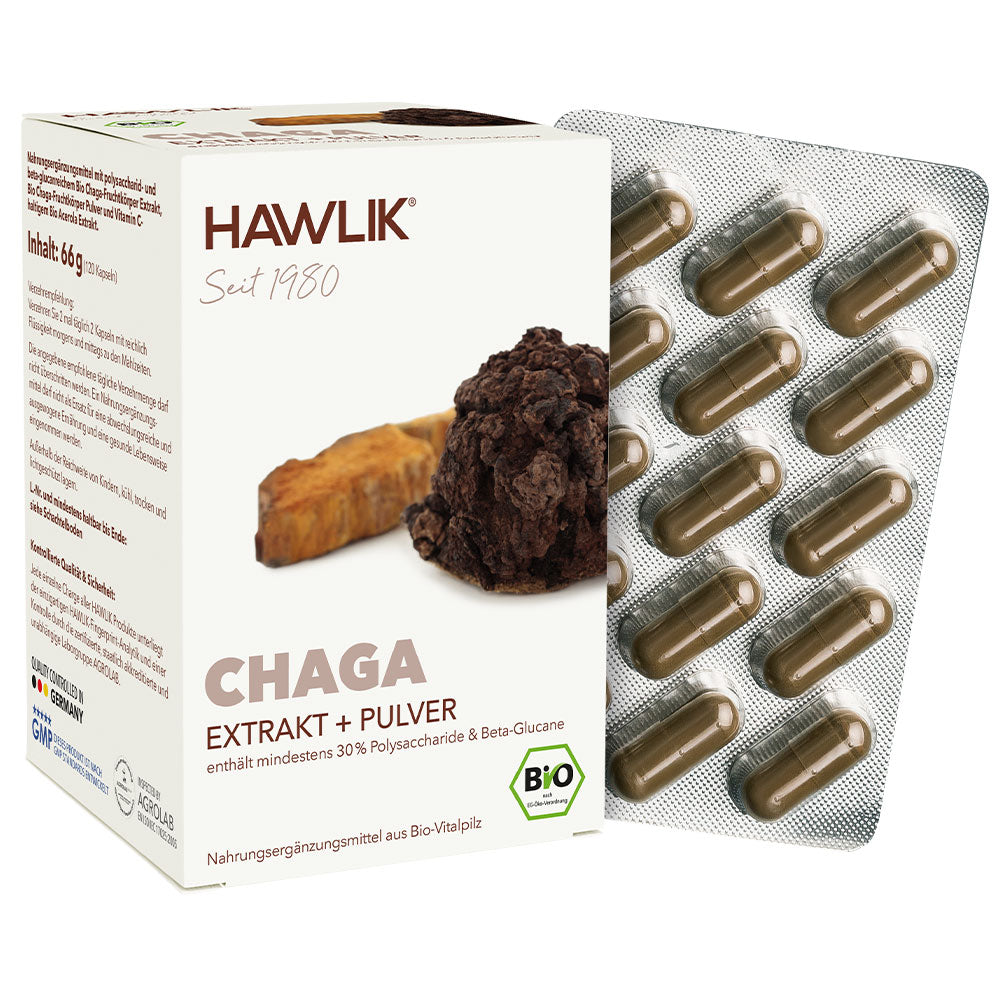
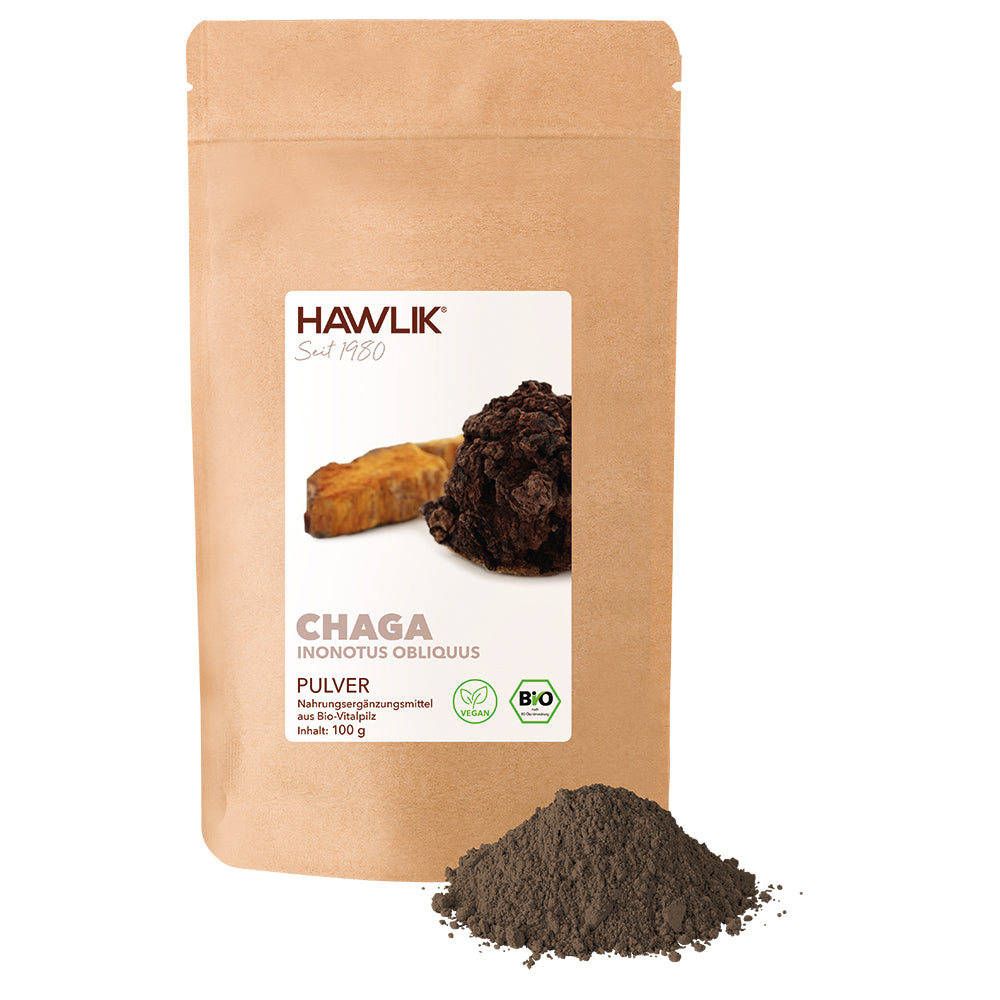
Chaga: These Dosage Forms are Available from Hawlik
As with all medicinal plants, the concentration of active ingredients in the untreated mushroom can vary greatly. Therefore, a standardized processing method, as guaranteed by Hawlik's medicinal mushroom products, is recommended for the use and dosage of Chaga. Since Chaga is wild-harvested, we at Hawlik ensure through comprehensive analyses that the ingredients are not affected by environmental pollution. This way, you can be sure that even with wild collection, pure nature ends up in our products. In our shop, you can buy Inonotus obliquus in the following dosage forms:
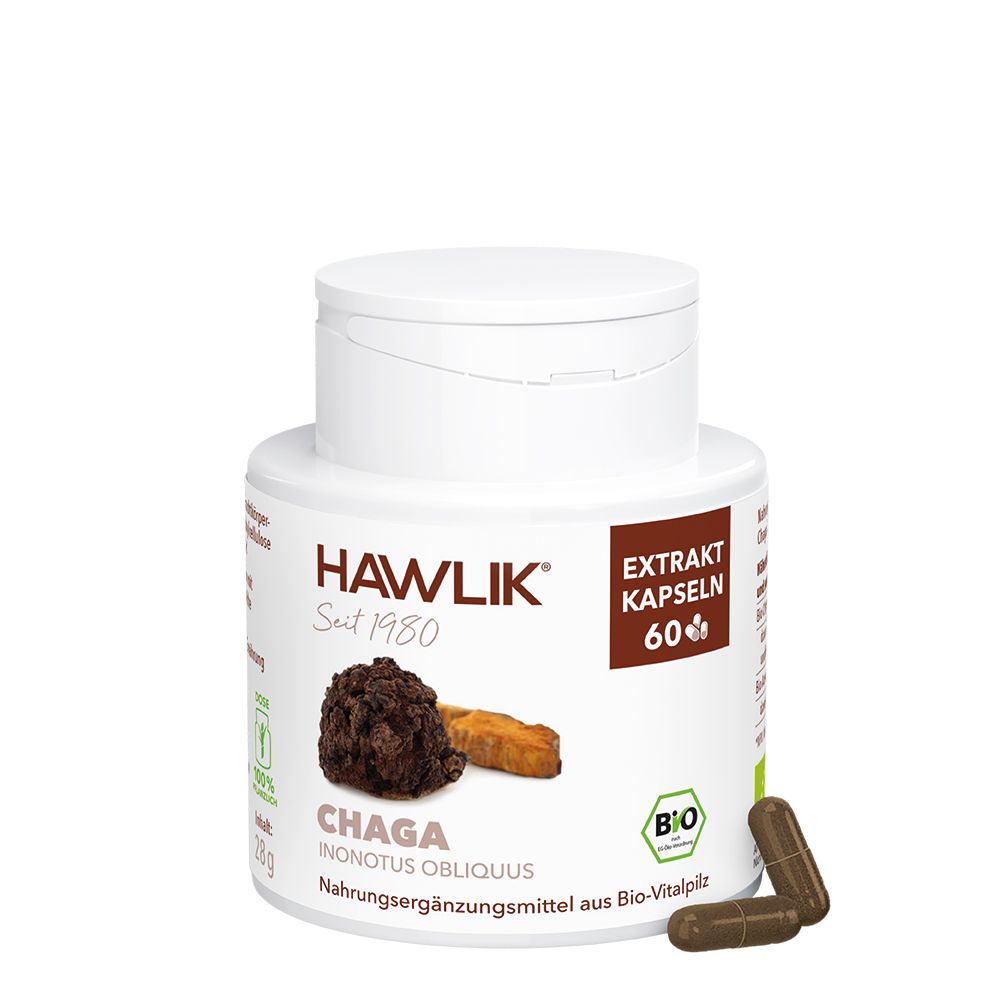
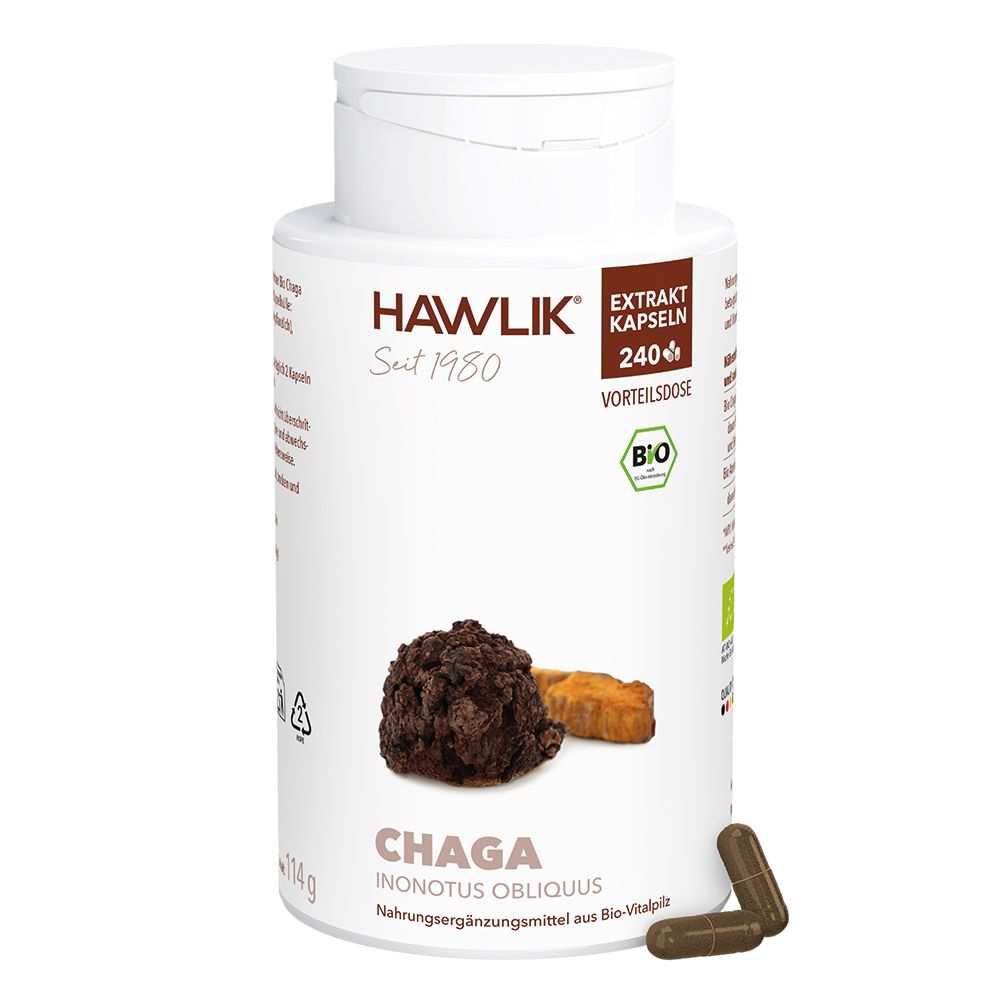
Chaga Extract Capsules
Highly concentrated dosage through extraction to 30% polysaccharides. With an extra dose of Vitamin C. Each capsule contains 300 mg of medicinal mushroom extract and 55 mg of Ester-C® (40 mg Vitamin C content). For our Chaga extract, we use a patented extraction process to release polysaccharides from the chitin walls of the whole mushroom, making them more bioavailable. Application and dosage: 2 Chaga extract capsules twice daily with plenty of liquid during meals.
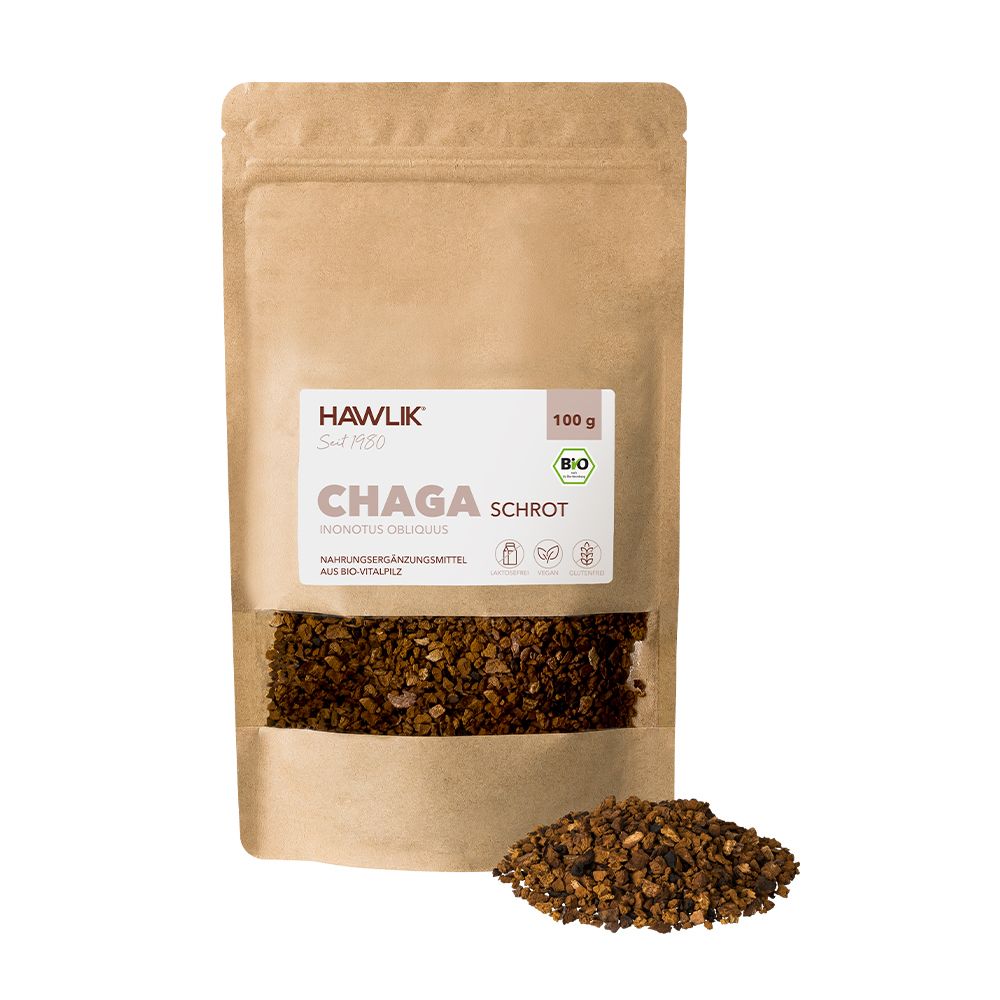
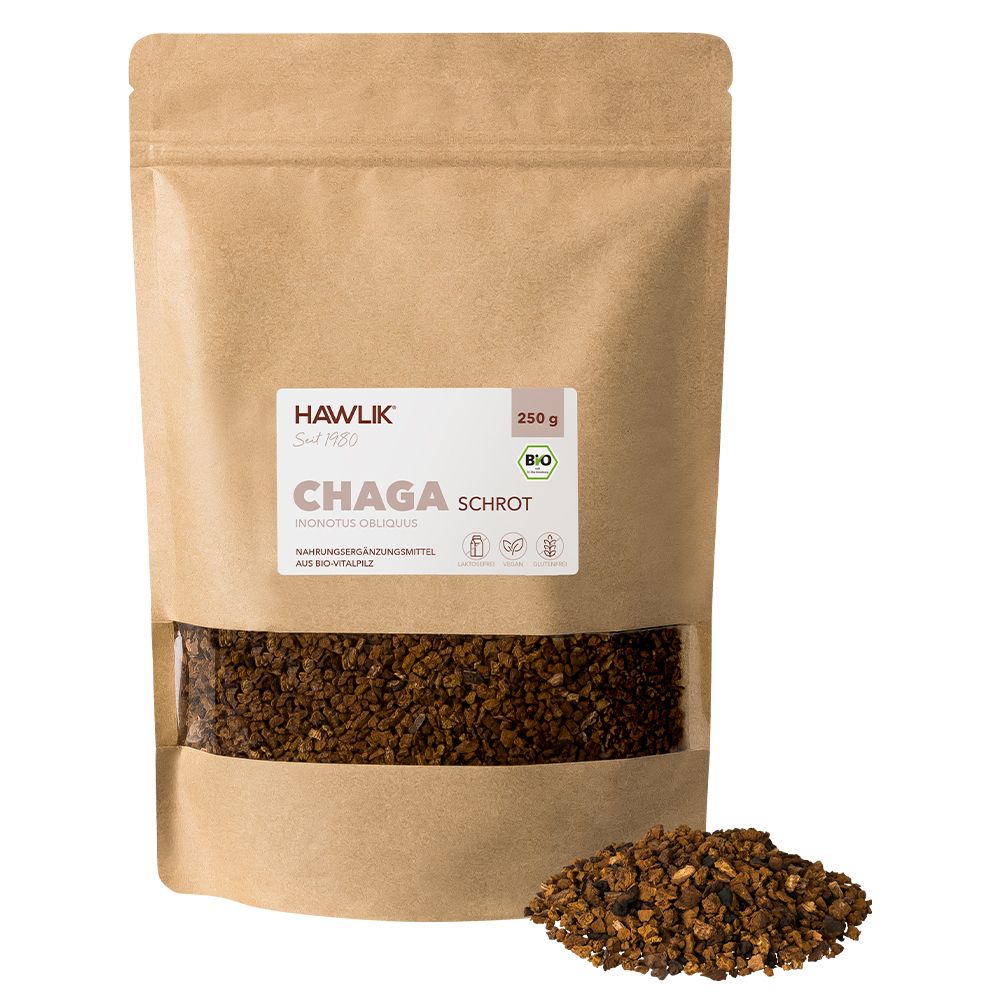
Chaga Tea (Crushed)
Our crushed Chaga is excellent for preparing as a hot water extract – to be enjoyed, for example, pure as a tea or in combination with coffee, herbs, spices, or fruits. Application and dosage: Infuse 2-4 tablespoons of crushed Chaga with 1 liter of hot water and let steep for approx. 15 minutes. The more crushed Chaga you use, the more bitter the tea will be!
Chaga Mushroom Ingredients
It is not without reason that the Inonotus obliquus is also called the “King of Medicinal Mushrooms.” It boasts a unique combination of different ingredients, including various polyphenols and polysaccharides, which are considered valuable antioxidants. Of particular note are the beta-glucans, which are present in Chaga in high concentrations. Overall, the antioxidant substances contained in Chaga have proven to be very water-soluble, making them particularly readily available for the human body. Various tannins, flavonoids, and minerals – especially potassium, sodium, and magnesium – also make Chaga a powerhouse of vital nutrients. A special extra of Chaga is the vital substance betulin, which the mushroom presumably synthesizes from its host tree, the birch. Over the long growth period of Chaga, betulin, which in the form of betulinic acid is often the subject of scientific investigations, apparently accumulates in the mushroom.
Chaga (Inonotus obliquus) is a mushroom that grows primarily on birch trees in the cold regions of the Northern Hemisphere, such as Northern Europe, Russia, and Canada. It is traditionally valued and is characterized by its distinctive, dark appearance and its diverse natural composition.
The most important ingredients of Chaga include:
Polysaccharides:
Complex carbohydrates that constitute a significant part of the mushroom.
Beta-glucans:
Natural dietary fibers, typical of many mushroom species.
Polyphenols:
Plant compounds that are particularly diverse in Chaga.
Melanin:
A natural pigment that gives Chaga its dark color.
Amino acids:
The mushroom contains various essential and non-essential amino acids.
Vitamins:
Including B vitamins.
Minerals and trace elements:
These include, for example, potassium, magnesium, iron, and zinc.
Our Chaga products are made from carefully selected raw materials and gently processed to best preserve their natural ingredients. Whether as capsules or powder – Chaga can be easily integrated into your daily routine.